
The best free VIN checker gives you key facts about any used car, instantly and without cost. VIN lookup tools scan insurance, DMV, and manufacturer databases. They reveal theft history, salvage titles, past recalls, and accident records. You can spot odometer fraud, check if a car was written off, or find red flags before buying. Free tools don’t show everything, but they help you avoid major risks early. This guide explains what you’ll see in a free report, what’s often missing, and when it’s smart to upgrade.
What Is a VIN and Why Do You Need It
A VIN is a 17-character code assigned to every modern vehicle. Find it on the dashboard, door frame, and on your registration documents. A VIN helps you learn more about the automobile’s history and verify important details. This number is essential when evaluating any used car or used vehicle. It also serves as your primary vehicle identification number and is considered a free vehicle identification number in some public databases. The code can reveal hidden issues that sellers and car dealers may not disclose.
You need a VIN for tasks such as:
- Checking ownership histories.
- Confirming make and model.
- Reviewing information about the vehicle’s history.
- Verifying accident history.
- Finding out whether the car has been reported stolen.
Around 450,000 vehicles in the U.S. are reported as stolen each year.
How VIN Checkers Work (Free vs. Paid)
VIN checks analyze publicly available records from reliable sources. These are insurers, states, and federal databases. A free tool can reveal basic information. A paid version usually unlocks a more complete set of data. Free results often focus on open recalls, theft status, and simple specs. Paid tools usually offer service history, sales history, and deeper title information. Many car buyers start with free tools to quickly screen vehicles. A VIN check is a smart first step before committing to anything.
Below is a comparison table showing the differences:
| Feature | Free Check | Paid Check |
| Basic vehicle specs | Yes | Yes |
| Theft records | Yes | Yes |
| Open recalls | Yes | Yes |
| Title problems | Sometimes | Yes |
| Service history | No | Yes |
| Comprehensive VIN data | Limited | Full |
| Odometer readings | Limited | Detailed |
Studies show that more than 20% of used cars have a title issue that may appear only in a paid report.
Best Free VIN Check Websites
Several trusted online platforms offer free access to essential records, helping you get fast insights into the car you’re considering. Below, the best VIN check tools are described.
NICB VINCheck
NICB’s database focuses on theft and total-loss claims. It’s one of the best options when you need a quick number check to confirm whether a car has been stolen. The tool uses insurance industry data to deliver reliable results. It’s simple, fast, and free, making it ideal for early screening. You can run a check here before contacting a seller.
- Checks theft status.
- Shows total-loss records.
- Uses verified insurance companies’ data.
- Easy-to-use and free services.
- Helps you run a VIN check quickly.
NHTSA VIN Decoder
The NHTSA tool helps learn about manufacturer details, safety features, and open recalls. It is government-operated, which makes it highly trustworthy. Results focus heavily on safety data, giving you transparency that many shoppers value. It’s a good starting point if you want to confirm basic specs and recall status before buying a car. This tool is available for free and works instantly.
- Safety-related data.
- Easy recall lookups.
- Breakdown of vehicle specs.
- Manufacturer and assembly info.
- Clear interface designed for public use.
EpicVIN’s Free VIN Decoder
EpicVIN is considered one of the most reliable platforms offering fast VIN lookup results. It pulls data from multiple sources, giving users access to broad and accurate records. This provider of vehicle history reports is known for strong data consistency and easy navigation. If you want to check VIN information without paying, EpicVIN is one of the best choices. It also helps users get a free VIN check in seconds.
- Accurate VIN checks across many databases.
- Good match rates for car’s VIN decoding.
- Basic free reports are available.
- Smooth interface that helps you get a free result fast.
- Strong reputation for data reliability.
VinFreeCheck’s Free VIN Decoder
VinFreeCheck provides both free and paid options depending on how much data you need. The platform retrieves details from federal and state databases, giving you a wide perspective on a car’s history. This tool is especially helpful for first-time buyers who want to understand the basics before paying for a check. It’s user-friendly and offers a convenient way to get free VIN checks during early research. You might find it helpful when you want to check a vehicle quickly.
- Pulls data from multiple state sources.
- Helps verify title issues.
- Provides simp,le free options.
- Friendly design for beginners.
- Clear breakdown of basic vehicle report elements.
VinCheckUp’s Free VIN Lookup
VinCheckUp offers a free VIN check service that focuses on specs, general records, and basic title data. While the more detailed information requires payment, the free version is still useful for quick screening. This tool can reveal information about the history of a car and whether the car shows early red flags. Many users consider it one of the best options when researching multiple vehicles. Its free results can help you decide if paying for a VIN check is necessary.
- Offers a free check for quick results.
- Provides state-level screening.
- Easy-to-read interface.
- Some data is available for free.
- Shows early warnings in the vehicle report.
How to Check a VIN for Free in Simple Steps
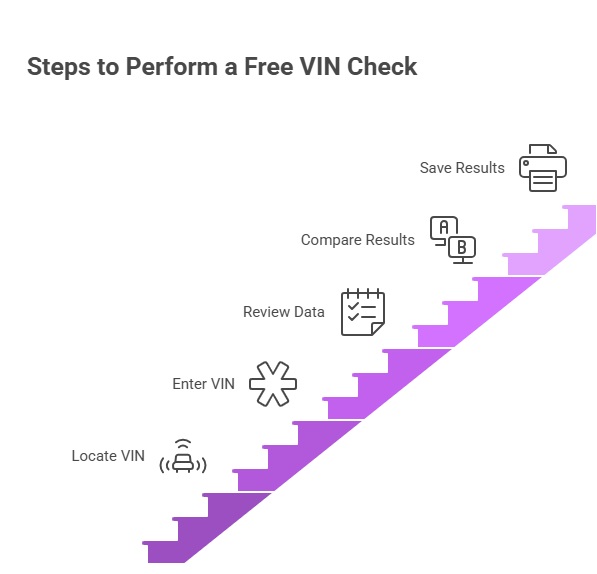
You can get reliable data without spending money if you follow a simple process. Free tools are helpful when you’re checking multiple vehicles at once. This method works well when buying a used car because you can compare results from different sites. You can also use free services to verify the basics before moving to a full report. The process below helps you get accurate results in minutes.
- Locate the VIN on the dashboard, door frame, or documents.
- Enter the VIN into a trusted free tool.
- Review recall status, basic specs, and theft data.
- Compare results from two or three platforms.
- Save or print the results for reference.
Nearly 30% of shoppers use at least two VIN checks before making a decision.
When to Upgrade to a Paid Vehicle History Report
A paid report is worth considering when you need deeper insights into a quality car, especially one with unclear origins. If the seller cannot answer basic questions, upgrading may save you from major risks.
Paid tools reveal hidden issues, including mileage inconsistencies, title irregularities, and unresolved liens. They’re especially helpful when buying a used car or when the free results leave unanswered questions. A paid tool becomes valuable once you’ve narrowed down your choices and want information about the used car’s history.
Common Vehicle Fraud Risks a VIN Check Can Reveal

Fraud often happens in the used market. VIN checks can uncover mismatched numbers, hidden damage, or suspicious mileage patterns. Many drivers use these tools to confirm whether the vehicle matches its paperwork. VIN can also highlight past disasters, insurance claims, or salvage titles. Consider performing free and paid VIN checks before buying a used car or any other pre-owned model.
| Risk Type | What It Means | How a Check Provides Clarity |
| Title washing | Dirty titles cleaned across states | Reveals state-to-state inconsistencies |
| Odometer fraud | Mileage rolled back | Flags abnormal odometer readings |
| Hidden accidents | Repairs not disclosed | Shows damage from older reports |
| Flood damage | Water-damaged cars resold | Indicates salvage or insurance events |
Legal Limitations of the VIN Lookup Tools
VIN tools rely on multiple databases, some of which may not update instantly. This means certain events may not appear immediately after they occur. Tools also vary in which states or agencies they pull from. Users should remember that no single source captures everything. Still, these tools help reduce risk when evaluating a car you’re researching. In some cases, they can’t check the detailed history until the records updated.
- Not all databases sync in real time.
- Some states restrict the release of certain records.
- Damage may appear only after the insurance company updates.
- Privacy laws limit sensitive owner information.
Summary
Using free VIN check resources is one of the best ways to screen a vehicle before making any commitments. They help you verify records, uncover basic risks, and understand the vehicle’s history better. While free options give you essential insights, moving to a full history report can reveal deeper issues if something seems questionable. These tools provide full vehicle history information and support smarter decisions when buying a car.
FAQ
How Do Free VIN Checkers Handle Classic Cars Manufactured Before 1981?
Most free tools can’t decode older cars because standard sequences were created in 1981. Classic vehicles often require manufacturer-specific lookup methods.
Are There Any Completely Offline VIN Decoders That Don’t Use the Internet?
There are printed reference books and CDs with decoding charts, but they are limited. Online databases still offer the most accurate and current results.
Do Vehicle History Reports Mention How Long a Car Sat Unsold on a Dealer’s Lot?
Some reports include sales-related timestamps. However, they rarely say exactly how long the car remained unsold on a lot. Data availability varies widely.
Is It Safe to Enter My VIN Online?
Yes. A VIN doesn’t contain personal information. Reputable websites only use it to retrieve vehicle data, so entering it online is generally safe.
Why Do Some VIN Reports Show Different Information?
Different services pull from different databases.
- Varying update schedules.
- Different state record access.
- Incomplete insurance data.
- Differences in salvage reporting.